If you’ve ever answered the same question multiple times during independent work—or watched a capable student rush through an assignment and miss obvious errors—you’re not imagining things.
Most students don’t struggle because they can’t do the work. They struggle because they haven’t yet developed a key executive function skill: self-monitoring.
The Problem Teachers See Every Day
In busy school and home classrooms, many students:
- rely on adults before checking their own work
- lose focus without realizing it
- feel overwhelmed but can’t name why
This leaves teachers stretched thin—redirecting, re-explaining, and stepping in when students actually need support learning how to think, not what to do.

What the Research Tells Us About Self-Monitoring
Self-monitoring is widely recognized as a foundational executive function skill. Experts Peg Dawson and Richard Guare, authors of Smart but Scattered Kids, consistently emphasize that students who struggle academically often know the material—but lack the executive skills needed to manage their learning.
In other words, these students are smart, but their executive functioning hasn’t caught up yet.
The encouraging takeaway? Executive function skills can be taught.
The Plan: Teach Students to Pause, Check, and Adjust
Effective executive function instruction doesn’t require adding a new program or overhauling your classroom routines. Instead, it focuses on making internal thinking visible and repeatable.
When teachers intentionally prompt students to pause and reflect before asking for help, students begin to:
- notice when they’re off task
- recognize errors independently
- regulate emotions during challenging work
Over time, this reduces reliance on adults and builds confidence.

What Success Looks Like for Teachers and Students
Teachers who embed self-monitoring strategies often report:
- fewer interruptions during independent work
- improved task completion and accuracy
- students who can explain what they tried before seeking help
- stronger engagement from students with ADHD or learning differences
These gains don’t happen overnight—but they compound with consistent practice.
A Classroom Tool That Supports Executive Function Growth
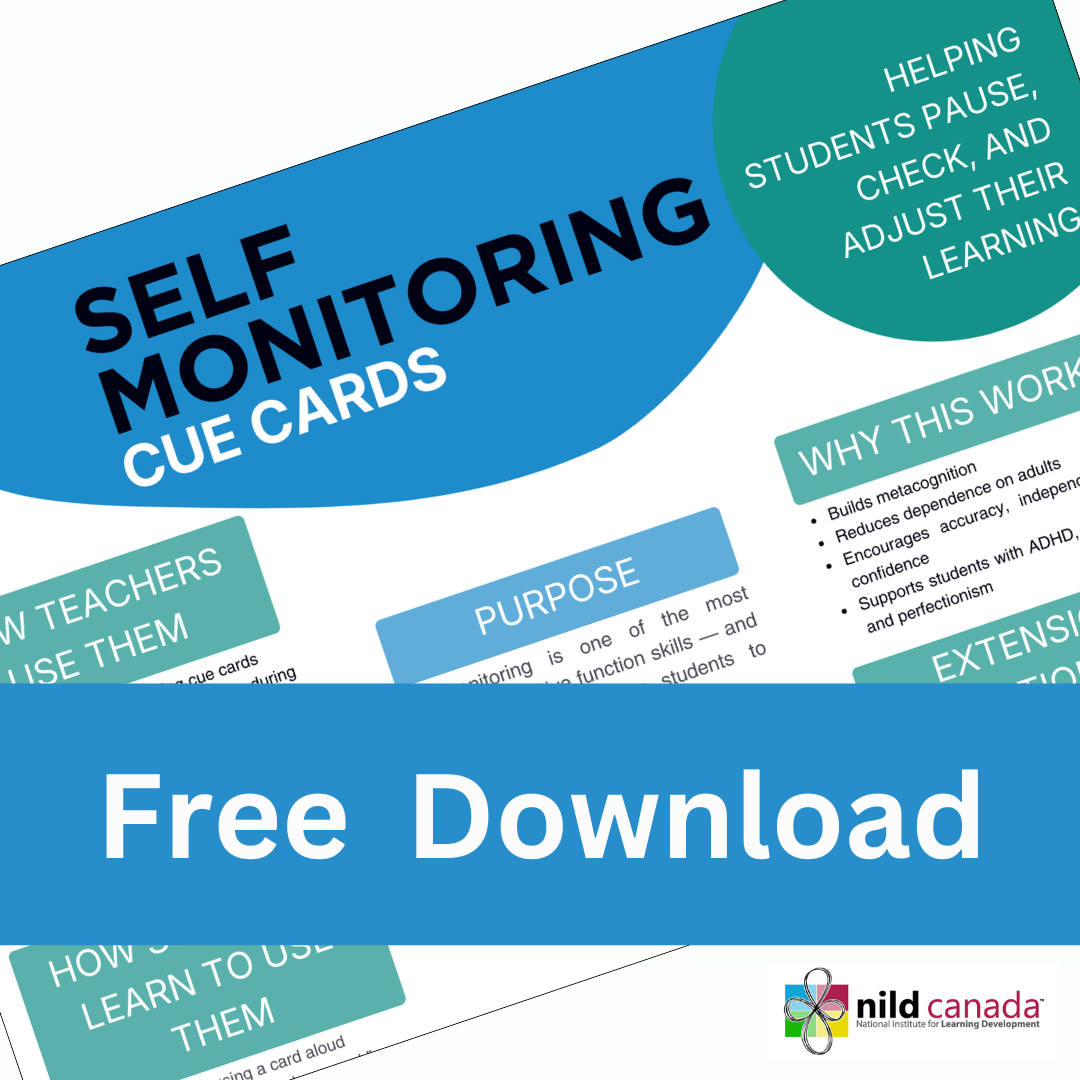
To support teachers in this work, NILD Canada offers Self-Monitoring Cue Cards —a simple, flexible tool designed to reinforce executive functioning during real classroom tasks.
The cards encourage students to slow down, reflect, and make intentional choices before turning to an adult for help.
Want to Go Deeper?
If you’re looking to better understand how executive functions like planning, working memory, and self-monitoring work together, you may find this article helpful:
Empowering Students with Executive Functions: Practical Insights for Educators