You’ve met this student before.
He walks into your classroom with wide eyes, a brand-new backpack, and a head full of questions. She colours carefully, listens intently, and can’t wait to learn to read.
But after a few weeks of instruction, the red flags begin to flutter.
He guesses at words instead of sounding them out.
She mixes up b’s and d’s.
He can’t follow simple directions.
She holds her pencil like a shovel.
You pause and ask yourself:
Is this student really ready to learn to read?
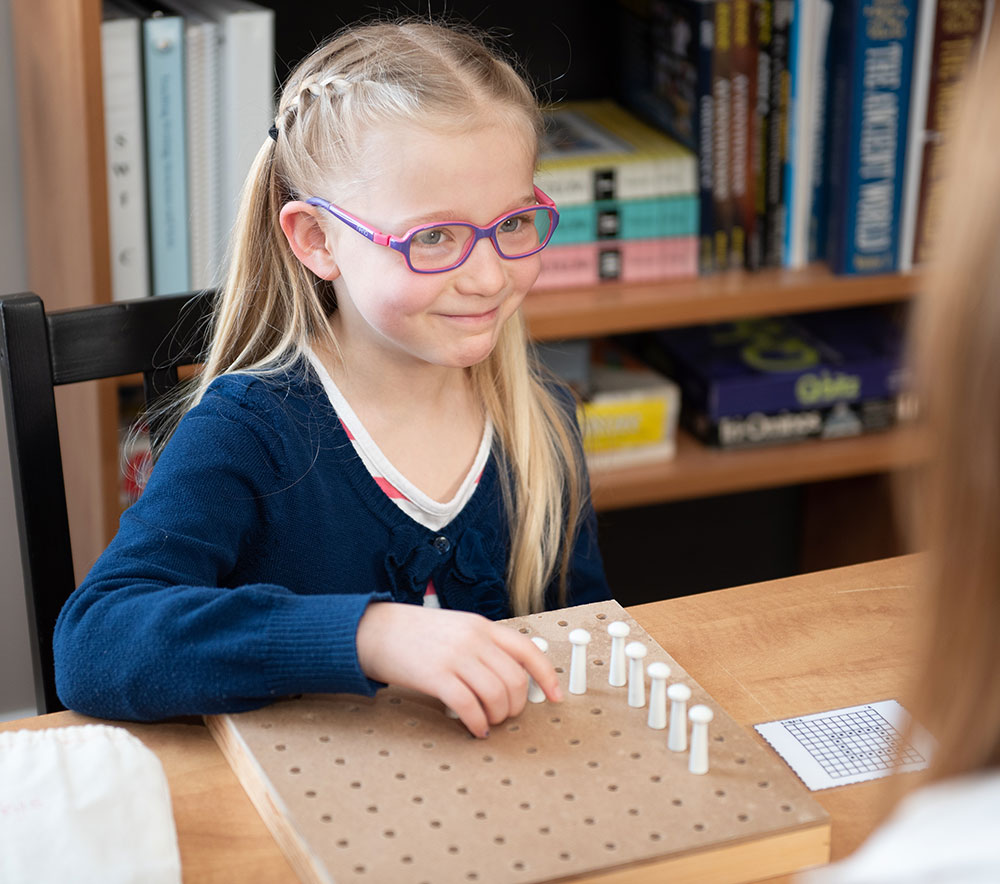
Why Reading Readiness Matters More Than You Think
In today’s classrooms, reading instruction often begins on Day 1 of kindergarten. But research—and experience—tell us that not every child is developmentally ready to read at five or six years old.
Yes, they’re eager. Yes, they’re bright.
But beneath reading success lies an invisible foundation of perceptual, motor, and auditory skills that must be in place for learning to stick.
When those foundational skills are missing or underdeveloped, even your best reading instruction may feel like trying to build a house without a foundation—no matter how strong the materials, everything starts to wobble. That’s why we created the “Is Your Student Ready for Reading?” checklist—a simple, observation-based tool that helps you quickly assess whether your students have the skills they need to begin formal reading instruction with confidence.

5 Readiness Areas You Can’t Afford to Miss
Many readiness screeners focus only on letter recognition or phonemic awareness. But the reality is, there are five key areas that matter just as much:
- Visual Perception & Visual-Motor Skills
Can they copy simple shapes? Track left to right? Hold a pencil with control?
- Auditory Perception
Can they tell if “bat” and “pat” sound the same or different? Recite simple rhymes or count to ten?
- Body Awareness & Directionality
Do they know their left from right? Can they sit upright and control fine motor movements?
- Language & Oral Expression
Are they speaking in full, age-appropriate sentences? Can they describe a picture or event?
- Cognitive Readiness
Can they follow two-step instructions? Focus on a task? Demonstrate basic memory and sequencing?
If a child struggles in three or more of these areas, they may not be ready for traditional reading instruction just yet—but they are ready for support.

You’re the Guide. Let Us Equip You.
As teachers, you’re already experts at observing and adapting. But you don’t have to do this alone.
At NILD Canada, we’ve been training educators in Search & Teach®, a research-based early intervention program that helps you:
✅ Identify readiness gaps
✅ Strengthen foundational learning skills
✅ Support students before failure sets in
This August, we’re offering a live Search & Teach workshop where you’ll gain hands-on tools to assess and build up those invisible learning skills—all through perceptual, motor, and cognitive development strategies that young children actually enjoy.
You’ll walk away confident, equipped, and ready to lay the groundwork for lasting reading success.
Don’t Wait Until They Fail
Reading struggles don’t appear out of nowhere. In most cases, the warning signs were there all along—subtle, quiet, and easy to overlook in a busy classroom.
The earlier we intervene, the better the outcomes—not just academically, but emotionally.
“It is a tragedy… that while we know clearly the costs of waiting too long, few schools have a mechanism to identify and help children before failure takes hold.”
— Dr. Joseph Torgesen, Florida Center for Reading Research
Ready to Help Your Students Build a Strong Foundation?
✅ Download our Is Your Student Ready for Reading? checklist and use it during the first few weeks of school.
✅ Register for the Search & Teach Workshop this August and get trained to intervene early, intentionally, and effectively.
Your students are ready to learn. Let’s make sure they’re ready to read.