There are often early signs that pre-reading skills need strengthening. You can see it before the data ever confirms it.
A Kindergarten student hesitates during rhyming games. Another struggles to remember a two-step direction. A bright, talkative child freezes when asked to identify beginning sounds. These are all signs that pre-reading skills need strengthening and that thoughtful early literacy intervention may be necessary long before formal reading failure appears.
As a primary resource teacher, you may be supporting students who appear susceptible to reading delay, yet you were never explicitly taught how to assess or teach foundational reading readiness skills intentionally.
You’re not alone. And the good news is—there is a clear, research-informed path forward.

Pre-Reading Skills Doesn’t Begin with Letters — It Begins with Perception
One of the most common misconceptions in early literacy instruction is that reading readiness begins with phonics alone.
Research and decades of clinical observation show that reading is built on perceptual development—the brain’s ability to organize, interpret, and remember what it sees and hears. Without these foundations, even strong phonics instruction can miss the mark.
Before a child can successfully learn to read, they need well-developed pre-reading skills, including:
- Auditory discrimination (hearing differences in sounds)
- Visual discrimination (noticing small differences in letters and shapes)
- Directionality (left–right awareness, sequencing, order)
- Memory (holding and recalling information)
- Motor planning and coordination
Dr. Rosa Hagin, one of the pioneers behind the SEARCH & TEACH© approach, captured this reality with a deceptively simple reminder:
“A five-year-old is a five-year-old is a five-year-old.”
This statement underscores a critical principle in early literacy instruction: instruction must respect a child’s level of perceptual development, not simply chronological age or curriculum pacing.
For example, a Kindergarten student receiving Tier 1 or Tier 2 support may struggle with rhyming, sound sequencing, or left–right directionality even while letter instruction is underway. In these cases, targeted Tier 1 or Tier 2 intervention that strengthens auditory and visual perceptual skills—through brief, intentional one-on-one or small-group activities—provides the foundation the child needs to access formal reading instruction with greater confidence and success.
Why “Wait and See” Can Be Risky in Early Literacy
Well-intentioned advice like “Let’s give it time” can unintentionally delay support until children experience repeated academic frustration.
As reading researcher G. Reid Lyon warned educators years ago: don’t delay.
Early literacy intervention is not about labeling children. It is about preventing academic and emotional consequences by strengthening foundational skills before reading instruction becomes overwhelming.
What Pre-Reading Skills Intervention Can Look Like in a School Setting
Here’s the encouraging part: effective pre-reading instruction does not need to be complicated or time-consuming.
Young children learn best through doing, moving, talking, and playing—not through worksheets or passive seatwork. That’s why perceptual activities are so powerful in primary classrooms and resource settings.
Simple, High-Impact Pre-Reading Skills Activities for Tier 1 and Tier 2 Support
The 30 Days of Pre-Reading Perceptual Activities guide offers low-prep, developmentally appropriate activities that fit naturally into resource time, classroom centres, or Tier 2 small-group intervention.
Examples include:
- Playing rhyming and sound-matching games
- Repeating short sequences of numbers or letters
- Sorting objects by size, shape, or colour
- Using movement games like Simon Says to reinforce left/right awareness
- Describing objects using precise oral language
- Practicing auditory memory through short sentences and directions
These activities may look simple, but they are strategic, intentional, and aligned with how the brain develops reading readiness.
Assessment Before Intervention: Why Guessing Isn’t Enough
One of the greatest challenges for resource teachers is deciding which pre-reading skills to target.
That’s where structured screening becomes invaluable.
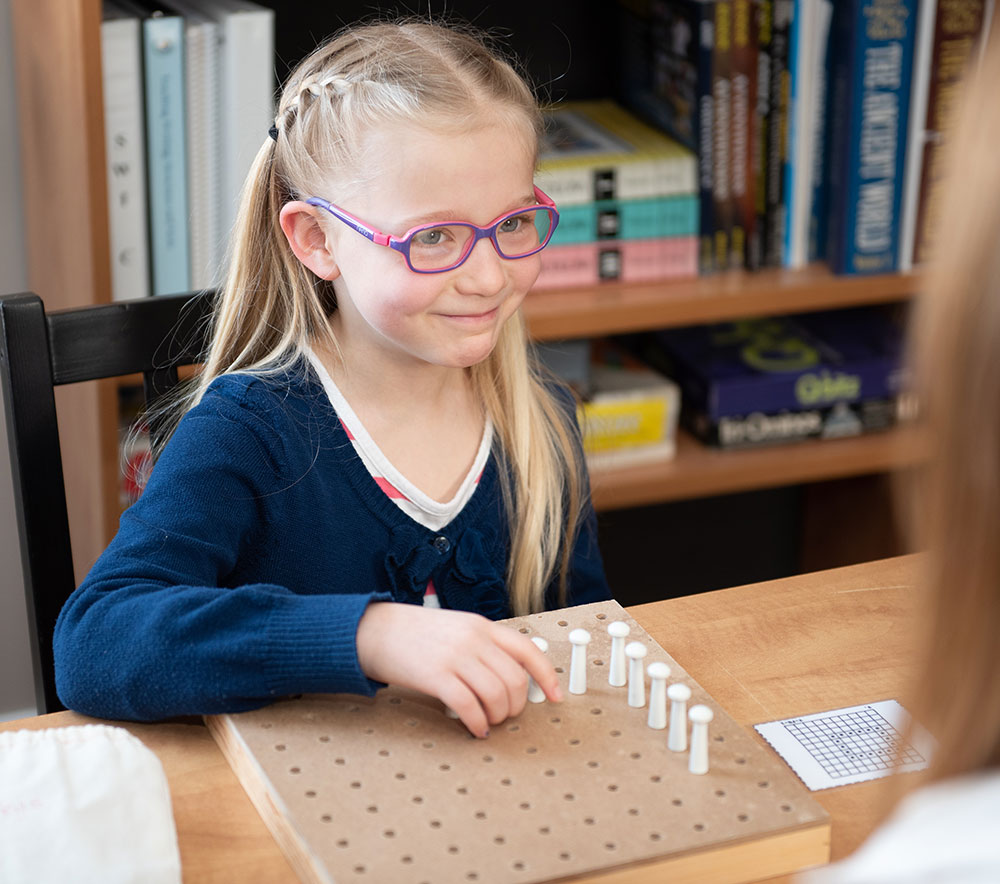
SEARCH® is a brief, one-on-one screening tool designed for children ages 63–80 months. It identifies strengths and vulnerabilities in skills foundational to reading—without measuring IQ or academic achievement.
Used preventatively, SEARCH helps educators:
- Screen entire classes efficiently
- Identify children at risk before reading failure occurs
- Plan targeted Tier 1 and Tier 2 interventions instead of broad guesswork
From there, TEACH® provides a structured set of perceptual tasks to address identified needs systematically and developmentally.
Bridging the Gap Between Curriculum and Child Development
Many early literacy curricula emphasize outcomes—letters, sounds, and reading behaviours—without addressing whether a child’s brain is ready for that instruction.
That’s the disconnect.
Pre-reading intervention bridges this gap by honouring:
- Developmental readiness
- Neurological foundations
- The way young children naturally learn
When these foundations are strengthened, reading instruction becomes more effective, more efficient, and far less frustrating for both students and teachers.
Encouragement for Primary Resource Teachers
If you’ve ever thought:
- “I know something is missing, but I don’t know what.”
- “These students aren’t responding to typical literacy interventions.”
- “I wasn’t trained in early perceptual development.”
Please hear this clearly: you are not failing your students—you are noticing what matters.
With the right tools, training, and understanding, primary resource teachers play a critical role in preventing reading failure before it begins.
Ready to Learn More About Early Literacy Intervention?
NILD Canada offers training in SEARCH & TEACH© , equipping educators with practical, research-based tools to support young learners early—when intervention matters most.
Since early intervention is so important, you can start immediately by downloading the free PDF: Is Your Student Ready for Reading: A Quick Screening Guide for Educators.

For a deeper look at how perceptual development supports early reading readiness, you may also find this related article helpful: How to Help Your Child Become a Reader: The Power of Perceptual Development.
While written for parents, it clearly explains why sensory and perceptual skills are foundational to reading success—insights that translate directly into effective classroom and Tier 1–2 interventions.
An ounce of prevention really is worth a pound of cure.