
When it comes to learning math, success doesn’t start with memorizing formulas or drilling times tables—it begins with number sense.
Number sense is the foundation upon which all mathematical understanding is built. It’s the intuitive feel for how numbers work: knowing that 8 is close to 10, that 4 + 4 is the same as 2 + 6, or that doubling one number and halving another keeps a product the same. It’s the ability to think flexibly, estimate reasonably, and see relationships among numbers.
Unfortunately, for many students, number sense doesn’t come naturally—and when this critical foundation is shaky, math quickly becomes confusing and frustrating. That’s why developing number sense early is essential to building confidence and competence in mathematics.

What Is Number Sense, Really?
Number sense is more than counting or recognizing digits on a page. It’s a deep, conceptual understanding of how numbers relate to one another and how they behave in operations.
A student with strong number sense:
- Recognizes patterns and relationships (for example, seeing that 3 + 7 and 7 + 3 yield the same result).
- Understands that numbers can be composed and decomposed in many ways.
- Estimates whether an answer makes sense before checking it.
- Makes connections between concrete experiences and abstract symbols.
In short, number sense is mathematical reasoning in action—it’s thinking, not just calculating.
The Challenge: Gaps That Grow Over Time
Research and classroom data tell a clear story. Students who lack number sense in early grades often fall behind and stay behind. According to Ontario’s 2024 EQAO results, only 61% of Grade 3 students and 50% of Grade 6 students met the provincial standard in mathematics.
While the reasons are complex, one major factor is that many students are pushed into procedural learning—memorizing steps—before they truly understand what numbers mean. When this happens, they may be able to complete worksheets or pass tests temporarily, but their understanding remains brittle. They struggle to reason through problems, apply knowledge to new contexts, or explain why something works.
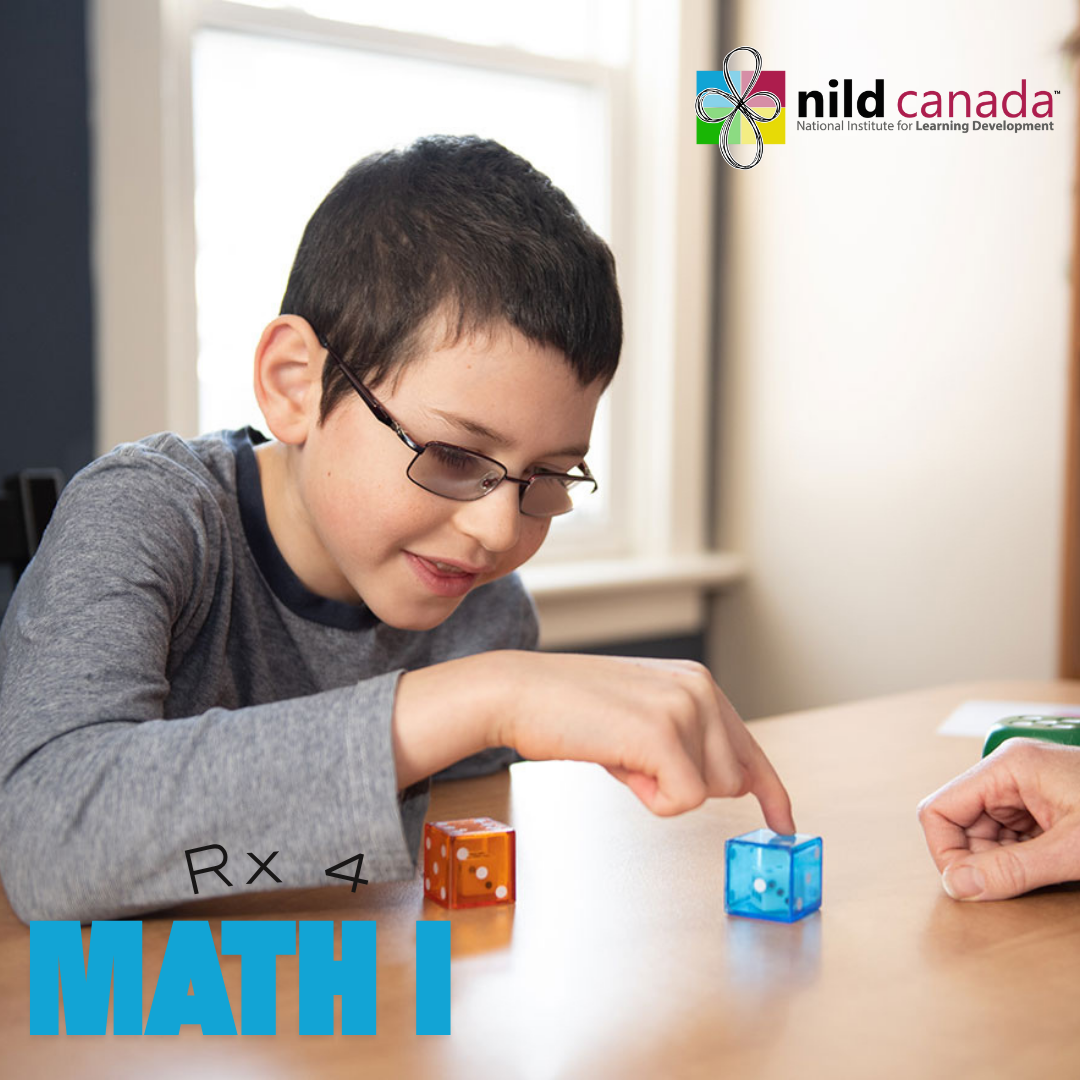
Building Number Sense Through Rx 4 Math
That’s where Rx 4 Math, a research-based intervention developed by the National Institute for Learning Development (NILD), comes in.
Designed for students in Grades K–5 who need early intervention or additional support, Rx 4 Math builds the deep understanding that procedural learning often misses. Rather than relying on repetition or rote practice, this dynamic program uses hands-on activities, mediation, and Socratic questioning to help students construct meaning and develop confidence.
Here are a few examples of Rx 4 Math activities that make number sense come alive:
1. Dot Patterns and Quantity Visualization
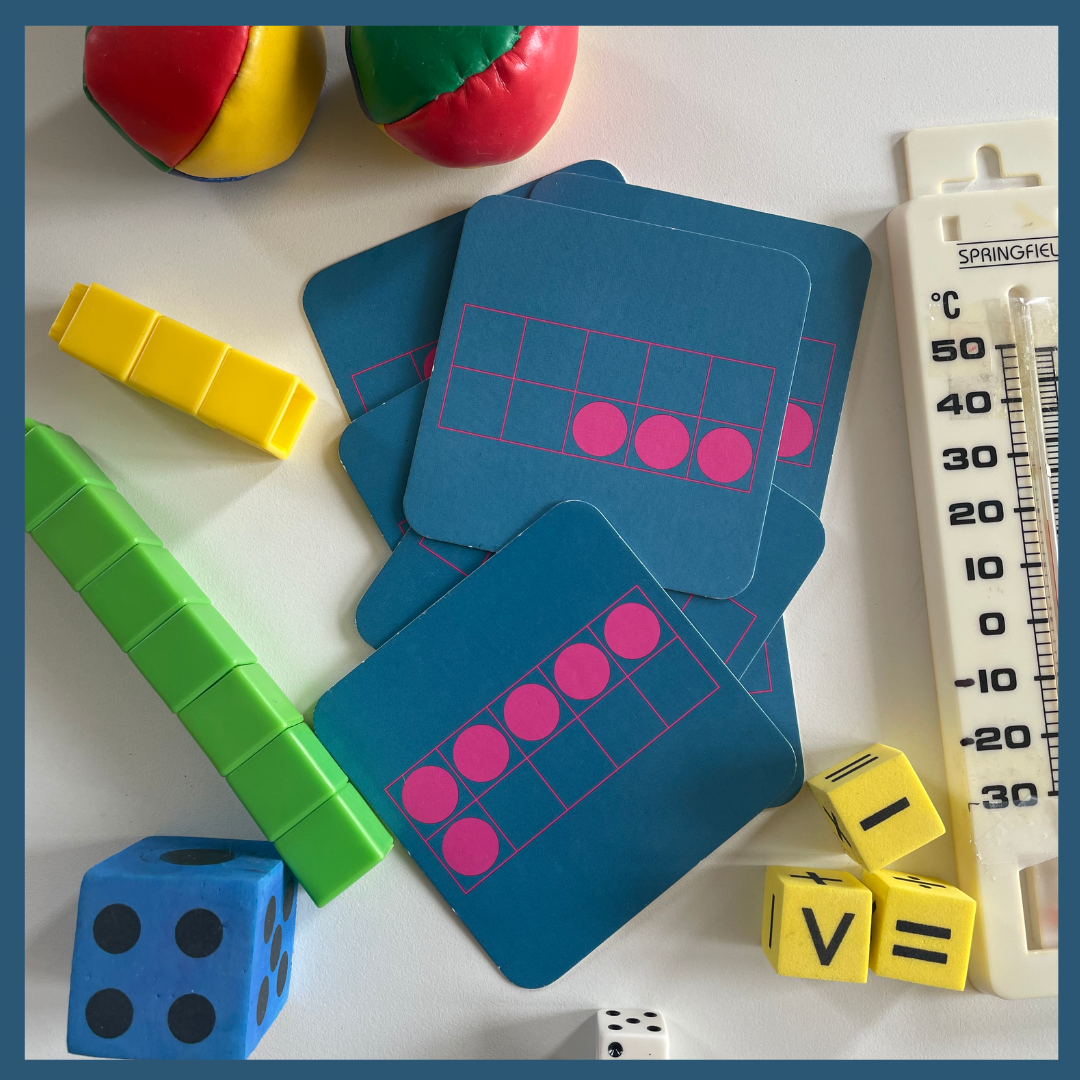
Students explore dot cards (arrangements of dots in familiar patterns such as dice faces or ten frames) and are asked questions like:
- “What do you see?”
- “How did you see it?”
- “Can you see it another way?”
This encourages students to subitize—to recognize quantities instantly without counting one by one—and to see numbers as composed of parts (for example, “I saw 7 as 5 and 2”). These conversations strengthen mental flexibility and deepen understanding of number relationships.
2. Number Relationships with Dominoes and Dice
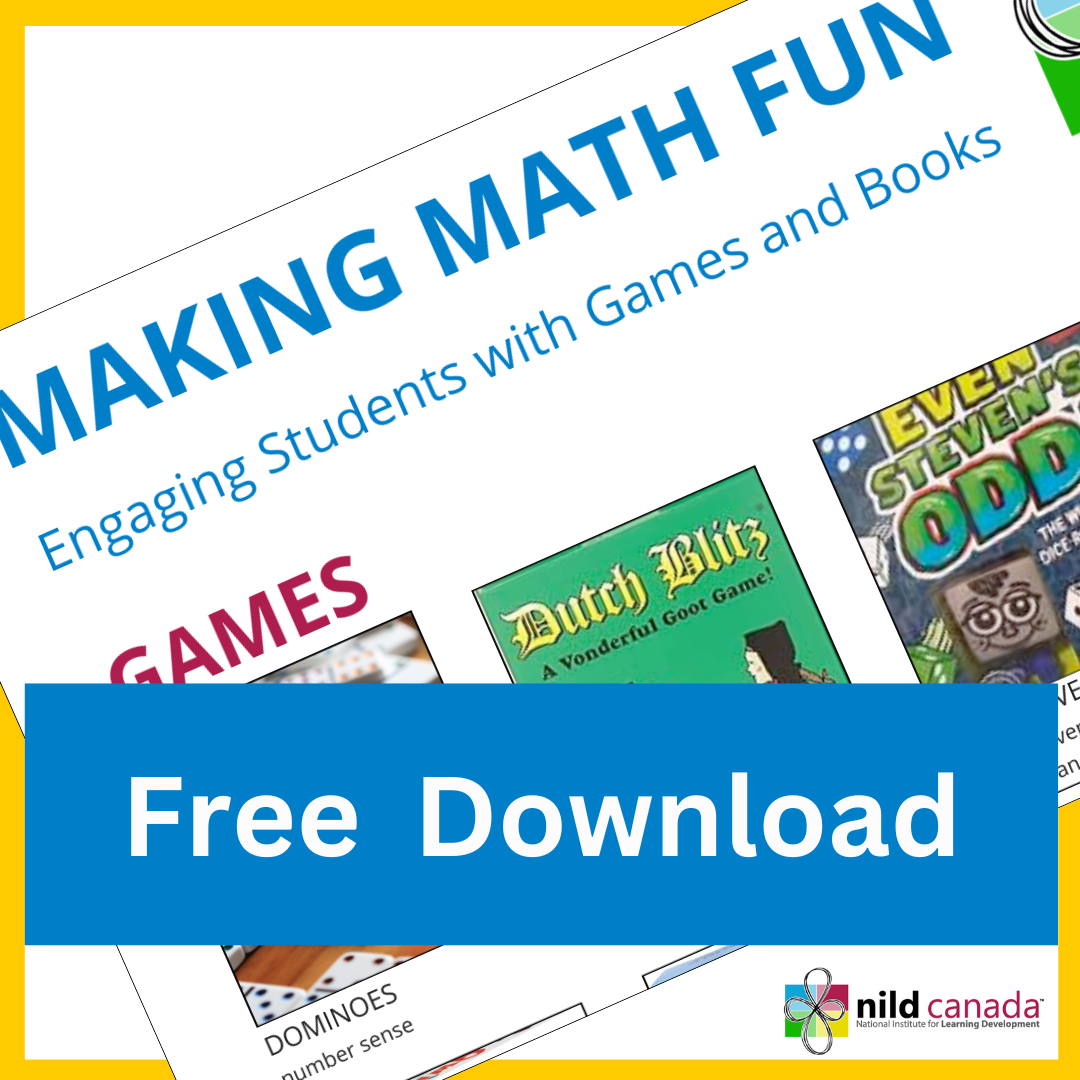
Games like Dominoes, Dutch Blitz, or Even Steven’s Odd (featured in NILD’s Making Math Fun resource) reinforce number relationships and pattern recognition in engaging ways.
Through play, students practice comparing numbers, noticing doubles, and connecting symbols to quantities—all while enjoying math in a low-anxiety environment. The goal isn’t competition but conversation: mediating students’ thinking through questions such as “How do you know this one is greater?” or “What happens if we change one number?”
3. Building Tens and Flexible Thinking
Another common Rx 4 Math activity involves building combinations that make ten using objects, number lines, or ten frames.
Students might use connecting cubes or cards labelled 1–9 and work together to make as many “tens” as possible.
This hands-on approach promotes fluency and flexibility—students start to see that 6 + 4, 7 + 3, and 8 + 2 all relate to the same benchmark number. When they encounter more complex problems later (like multi-digit addition or subtraction), they can draw on these mental anchors.
Why Mediation Matters
A key distinction in Rx 4 Math is the mediated learning approach. Instead of simply giving instructions, the teacher becomes a mediator—asking guiding questions that prompt students to notice, compare, justify, and reason.
This Socratic questioning develops cognitive functions such as comparison, categorization, and sequential thinking, which are essential not only for math but for all learning. Students aren’t told what to think—they’re taught how to think.
For example, when a student miscounts or misjudges a quantity, the mediator might ask,
“What made you choose that answer?”
“Could there be another way to see it?”
“How does that connect to what we did yesterday?”
Through dialogue, students learn to reflect on their own thinking, strengthening both their mathematical reasoning and their confidence.
The Ripple Effect: Confidence, Fluency, and Joy
As number sense grows, so does confidence. Students who once dreaded math begin to approach problems with curiosity and persistence. They start to see patterns, make predictions, and trust their reasoning.
This confidence ripples outward—students who feel capable in math often show improved focus, executive functioning, and motivation in other subjects as well.
Laying the Foundation for Lifelong Learning
Number sense is not a skill that’s mastered and forgotten—it’s a lifelong foundation that supports every mathematical concept that follows. When we invest in developing number sense through thoughtful, hands-on, and mediated instruction, we set students up for lasting success.
Whether you’re a classroom teacher, resource educator, or homeschool parent, the Rx 4 Math approach offers a practical, research-based way to make math meaningful again—one number at a time.
Ready to strengthen number sense in your students?
Learn more about upcoming Rx 4 Math workshops and discover how you can help students build math confidence that lasts.