What if you could identify a learning challenge before it became a reading problem?
Many parents and educators notice subtle signs that a child is struggling long before report cards, standardized tests, or formal assessments reveal a concern. A child may have difficulty remembering letter names, following simple directions, or recognizing patterns. Often, these signs are dismissed with the hope that the child will “catch up” with time.
Unfortunately, research suggests that waiting can make learning difficulties harder to address.
The good news is that early intervention can dramatically improve outcomes for young learners. In this post, we’ll explore why early intervention matters, how to recognize early warning signs of learning challenges, and what steps parents and educators can take to support children before frustration and academic failure take hold.
What Is Early Intervention, and Why Does It Matter?
Early intervention refers to identifying and addressing learning vulnerabilities before they significantly impact academic achievement.
For young children, learning challenges rarely begin with reading itself. Reading depends on a foundation of cognitive and perceptual skills, including auditory processing, visual perception, memory, sequencing, attention, and fine motor development. When weaknesses exist in these foundational areas, learning to read, write, and perform math tasks can become unnecessarily difficult.
Research consistently demonstrates the importance of acting early:
- Dr. Reid Lyon emphasized that reading failure can often be prevented when intervention begins early.
- Dr. Joseph Torgesen found that children who receive support early require significantly less intervention than those identified later.
- The National Institute of Child Health and Human Development reported that effective early intervention can reduce the need for special education services by as much as 50%.
The earlier learning gaps are identified, the easier they are to close.
How to Identify Learning Challenges Early
Step 1: Watch for Language and Auditory Processing Difficulties
Young children who struggle to process spoken language may:
- Have difficulty rhyming words
- Frequently mispronounce words
- Struggle to remember letter names and sounds
- Have trouble following multi-step directions
These skills are foundational to phonological awareness, one of the strongest predictors of reading success.
Step 2: Observe Visual Perception and Coordination Skills

Reading requires children to accurately recognize and distinguish letters, numbers, and patterns.
Warning signs may include:
- Difficulty recognizing letters, numbers, or shapes
- Trouble copying simple patterns
- Challenges with puzzles
- Weak hand-eye coordination when writing, cutting, or drawing
These difficulties can impact a child’s ability to recognize words quickly and accurately.
Step 3: Look for Memory and Sequencing Struggles
Strong memory and sequencing skills help children learn letter patterns, follow routines, and retain new information.
Watch for children who:
- Forget simple routines
- Have difficulty recalling details from stories
- Struggle to remember the order of letters, numbers, or events
- Need frequent reminders for familiar tasks
Persistent difficulties in these areas may indicate underlying processing weaknesses that deserve attention.
Step 4: Notice Attention and Processing Speed Challenges
Some children understand concepts well but require significantly more time to process information.
Possible signs include:
- Difficulty staying focused on learning activities
- Becoming overwhelmed by multiple directions
- Working noticeably slower than peers
- Frequently forgetting what they were asked to do
These challenges can affect learning across all academic subjects.
Step 5: Take Action Before Academic Failure Occurs
One of the most common mistakes adults make is waiting for a child to fail before seeking support.
By the time reading difficulties become obvious in Grades 2 or 3, the gap between struggling readers and their peers may already be substantial. Early support allows educators and parents to strengthen foundational skills before learning difficulties affect confidence, motivation, and self-esteem.
How SEARCH & TEACH® Supports Early Intervention
SEARCH & TEACH® was designed specifically to identify learning vulnerabilities before academic failure occurs.
SEARCH: Identifying Vulnerabilities Early
SEARCH is a brief screening assessment for children in Kindergarten through Grade 2. In approximately 20 minutes, it evaluates skills related to:
- Visual perception
- Auditory processing
- Memory and sequencing
- Fine motor development
Rather than waiting for a child to struggle academically, SEARCH helps identify areas that may interfere with future reading and learning success.
TEACH: Strengthening Foundational Skills

Once areas of weakness are identified, TEACH provides structured, hands-on activities designed to strengthen the underlying skills required for reading and learning.
Activities focus on developing:
- Visual memory
- Auditory processing
- Phonemic awareness
- Letter recognition
- Sequencing skills
- Fine motor control
The goal is simple: strengthen the building blocks of learning before academic challenges emerge.
Tips for Supporting Young Learners at Home and School
While formal intervention can be extremely helpful, there are also simple ways to support perceptual and cognitive development every day:
- Read aloud regularly and discuss stories together.
- Play rhyming and sound-awareness games.
- Practice following two- and three-step directions.
- Use puzzles, pattern activities, and matching games.
- Encourage activities that strengthen fine motor skills such as drawing, cutting, and building.
Small, consistent opportunities to strengthen these skills can have a lasting impact on future learning.
Closing
Children rarely wake up one day suddenly struggling to read. Often, the signs are present long before formal academics reveal a problem.
When parents and educators learn to recognize early warning signs and respond proactively, they can help children develop the foundational skills needed for reading, writing, and lifelong learning success.
The most effective intervention is often the one that happens before failure occurs.
Download Your Free Resource
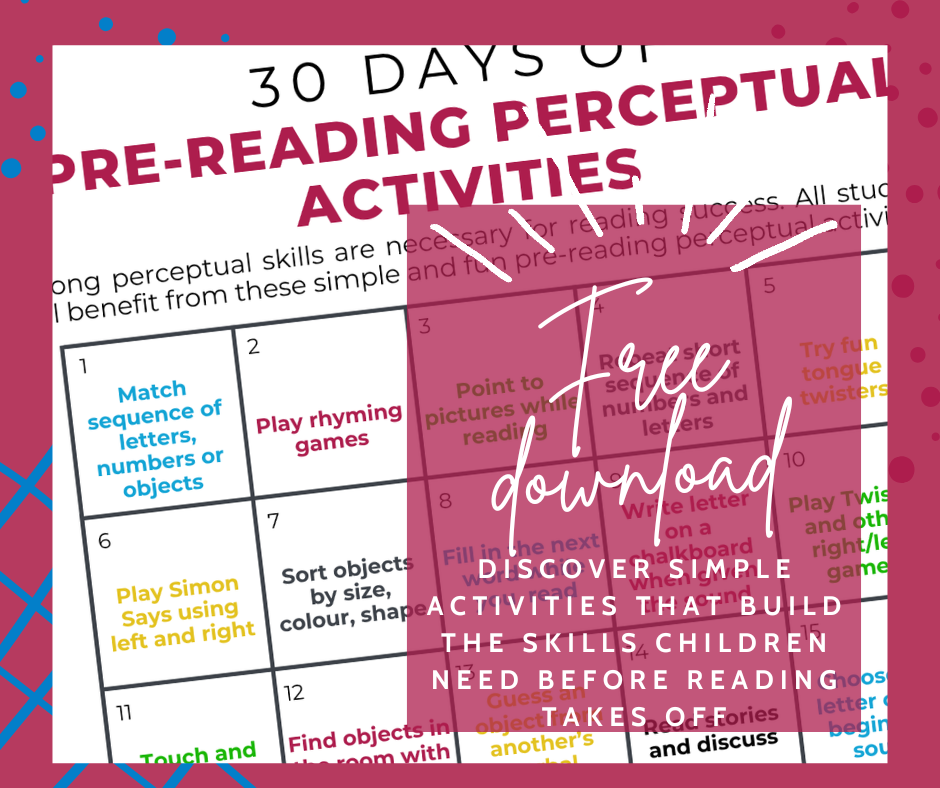
Download our Free 30 Days of Pre-Reading Perceptual Activities Guide and discover engaging activities that strengthen the visual, auditory, memory, and motor skills young learners need for reading success.
Interested in learning more about SEARCH & TEACH®? Visit NILD Canada to explore upcoming workshops and training opportunities.